
Evan’s Life in the Desert Prison
The Reincarnationist PapersEvan’s imprisonment strips away his confidence and comforts until endurance becomes a question of identity, responsibility, and whether he can continue living.
increasing Bearing strength in each event
 decreasing
Bearing strength in each eventdecreasingSentences Without Hope
Sentences Without Hope
A chain of transfers
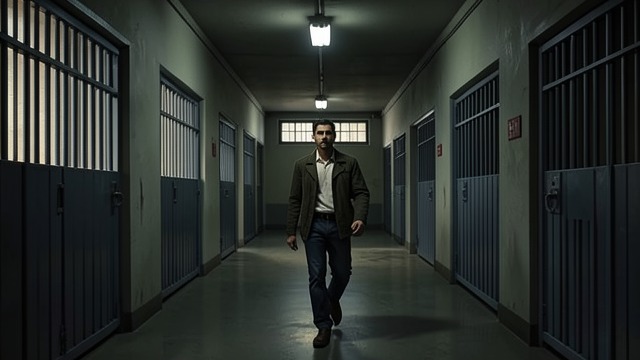
Evan is moved from Swiss detention through Italy and back to Tunisia. Each stop brings harsher confinement and fewer ways to contact anyone who might help him.
Trial as formality
In Tunis, a brief proceeding ends with a twenty-five-year sentence, alongside another consecutive sentence imposed in Rome. The legal process gives Evan little opportunity to challenge the outcome.
Isolation begins
He reaches a remote desert prison with no meaningful access to the outside world. His expectations of quick escape are replaced by the problem of surviving the conditions immediately before him.
The First Beatings
The First Beatings
Punishment on arrival
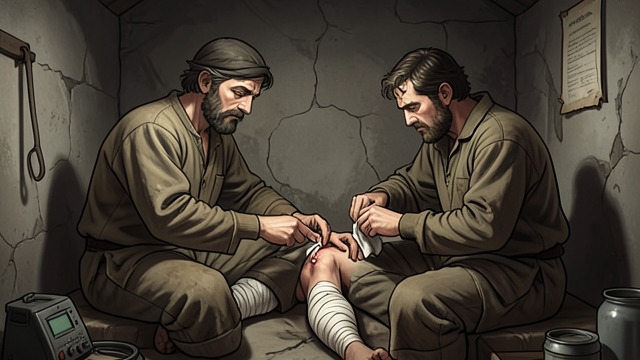
Evan is denied shoes, struck for asking about them, and warned not to speak. The guards use humiliation and physical force to establish who controls the prison.
A cellmate intervenes
Reginald cleans Evan’s wounds and explains the routines of the cell. His humor and attention provide the first human connection Evan has had since imprisonment.
A fragile refuge
The cell offers no safety from abuse, but companionship changes how Evan experiences it. Reginald’s insistence that Evan looks all right becomes a small defense against the prison’s effort to reduce him to his injuries.
A Prison Routine
A Prison Routine
Life reduced to necessities
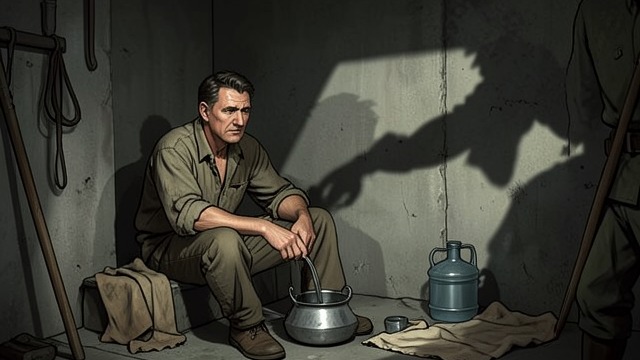
Evan learns the schedule of food, water, the chamber pot, and the short daily period in the yard. The prison’s monotonous rules make each ordinary need a negotiation with scarcity.
Reginald’s small rebellions
Reginald keeps conversation alive and turns the call to prayer into a chance for irreverent performance. His jokes do not change the guards’ power, but they preserve a measure of personal choice.
Shared vulnerability
Evan begins to understand how fragile survival is when communication and representation are unavailable. Reginald’s concern for his family also shows what imprisonment takes from those waiting outside.
Clarity in Confinement
Clarity in Confinement
Attention sharpened
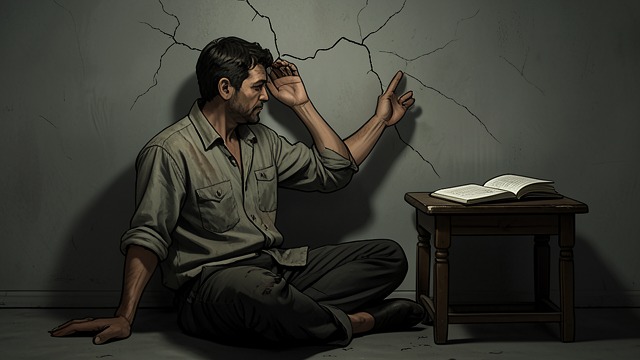
With few distractions, Evan begins tracing cracks, counting breaths, and studying small details around him. What first seems like a pastime gradually becomes an intense, difficult clarity.
Writing as escape
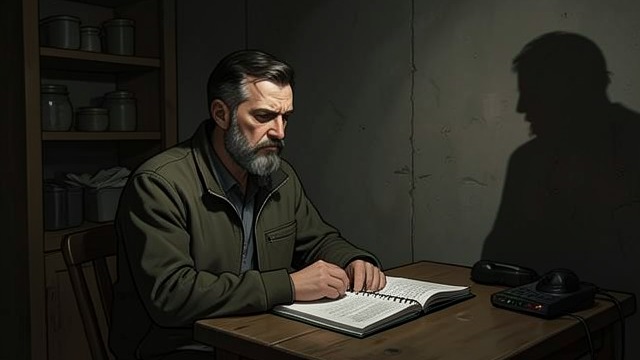
Evan uses notebooks from a relief parcel to record his history. Writing gives his attention a task and turns confinement into a space where he can examine how he reached this point.
An unfinished account
The manuscript does not promise that he has understood himself fully. Evan is unsure whether prison is the ending of his story or the point at which its real subject begins.
The Decision to Die
The Decision to Die
A narrowing horizon
Repeated abuse and interrogations erode Evan’s ability to imagine a future outside prison. He begins to think of death as a way to end the conditions that are dissolving his sense of self.
A belief tested
Evan questions whether reincarnation makes suicide a form of escape or merely another transition. His memories offer no certainty about what happens between lives, only the conviction that the person who returns remains continuous.
Life and surrender entwined
The possibility of ending his present life becomes entangled with his hope of becoming himself again. His conclusion is not presented as peace but as a desperate attempt to make sense of a world in which he feels trapped and abandoned.
After Evan’s capture in Zurich
Evan’s first evening at the desert prison
The first weeks of confinement
Several weeks into imprisonment
Near the end of Evan’s prison manuscript
